Thursday, July 22, 2010

Crafty Money Management

Heading back to school, I am a little worried about sticking to a budget. At this point, I usually intuitively know if I am overspending or on target with my current income. But cutting my income drastically has me worried I may continue to spend without having the income to back it up. So I have decided to switch to a cash only envelope system, a la Dave Ramsey. Its where you take cash for all of your non-fixed expenses (groceries, gas, repairs, etc.) for a given pay period and put it in separate envelopes. When the money in a particular envelope is gone, it is gone until the next pay period. This process eliminates outspending your income.

I set up my system tonight with paper envelopes and a little plastic holder for the envelopes. I thought I was so smooth. Then I went and found this...


I love this as a sewing project! It will make use of the odd scraps I have started collecting from other sewing projects. And I can manage to avoid using zippers, my least favorite aspect of sewing to date.

Now, to figure out how to repurpose the plastic holder I already have...

Saturday, June 19, 2010

Soaping

Here are some photos of my latest soaps.

I've made lemon sage poppyseed soap, oatmeal soap, and Crisco soap colored with cocoa powder. I made two patches of the Crisco - one half clear- half brown, the other entirely brown. The oatmeal and lemon sage poppyseed soaps are castile soaps (80% olive oil/20% coconut oil), while the Crisco soap is 50% olive oil/50% Crisco (soybean and palm oils).

My favorite is the oatmeal - it lathers well from coconut oil, but exfoliates (oatmeal) and is a gentle moisturizer (olive oil).

Any suggestions for the next batch?


Learning to Roll a Kayak

Last night was my first attempt at rolling a kayak - I did it, but not without some assistance. I am looking forward to trying this again. It was fun!

Here's a video demoing a roll. This is not me - I do NOT look this good.

Friday, June 11, 2010

Consequences of Oil Not in Our Backyard

NIMBY = Not In My Backyard

NIMBYism is what happens when a homeowner's association or community bands together to protect their property values and environment against an undesirable construction project, power plant, Wal-mart, etc. The downside of this is when the demand for the undesired activity remains, which results in it being installed elsewhere, somewhere with less regulations.

The oil spill in the Gulf of Mexico is horrific and of proportions that Americans have never witnessed. But this post is about what happens when oil spills don't happen in our backyard. We don't see the consequences of them, as they are happening somewhere else, to someone else. Unless we (the demand source for energy) curb our oil consumption, NIMBYism will continue to allow this to happen.

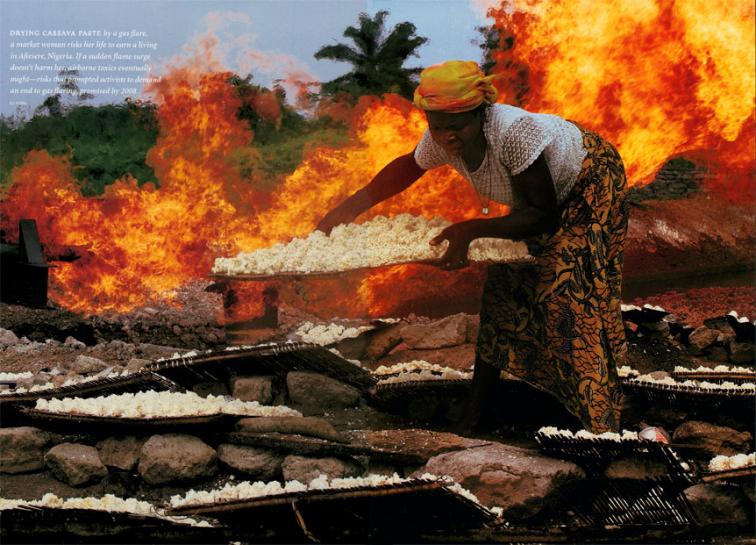
These photos show oil pollution in the country of Nigeria - a country rich in oil and other natural resources, but with high poverty levels and limited environmental regulations. People in Nigeria have to live with the long-term consequences of oil pollution.


Listen to the audio clip below, to hear how Nigerians are responding to the cleanup efforts in the Gulf. It is disheartening to realize that oil spills are always happening in Nigeria and without associated cleanup efforts.


Living With Long-Term Oil Pollution in the Niger Delta


--------------------------------------------------------------

There is another acronym I just ran across, NOPE.

NOPE = Not on Planet Earth

This concept means that rather than pushing the undesirable consequences onto someone else, no one should have to live with undesirable consequences.

While this might be a little naive, given our continuously increasing consumption of energy sources, it is a goal working for - No one should have to live in such conditions, regardless of your income level or political power.

The Eco-Justice Ministries in Denver, Colorado has an interesting article about this concept, which inspired this post. Check it out at http://www.eco-justice.org/E-100507.asp.

Photo sources 1, 2

Wednesday, June 2, 2010

Staying Put

“Americans are said to thrive on change and novelty. But do we? Are transient families more emotionally secure and financially stable than those who put down roots?...Humans are curious creatures and it’s natural for us to want to explore new terrain. Nevertheless, a compelling case can be made for resisting this impulse. Thriving also has something to do with settling in.” Michael A. Shuler


My dad came to visit a few weeks ago, but I forgot to give him one of his books back. So I had better comment on it quickly, before he realizes.

The second section of this book, Making the Good Life Last, Four Keys to Sustainable Living, refers to staying put. Michael Shuler talks about staying put in a location, in a vocation, in your personal life (hobbies, friends), and in relationships.

I have been thinking about this key for a while, because I have moved a lot growing up and in my early adult years. I’ve only been in Charleston for a year and a half. I love it here, but I am leaving to search for a new twist on my vocation, a PhD program in sustainability at University of Maine.

It has been a while coming to make this decision – I have tried on a few hats since I finished undergraduate work, each one teaching me a little more about what I do and don’t want to do career-wise and with my life in general. I have learned more about myself than I knew or understood in my twenties. And it has changed my choices and desires for how I live my life.

So staying put seems a difficult thing to do when you are young – I think it may be something to be aware of, but to grow into as you learn more about what you want and need. It is hard to commit to something that you do not know well. There was a church service at the Unitarian Church of Charleston here a few months back where the sermon referred to this. At coffee hour, I met someone new to the area and in their early 30s and he remarked on how unlike his life the sermon was and how it made him feel a little bad about his life. I replied that these comments about staying put seem to come from people that have moved around a bit and learned from their own mistakes.

Indeed, Michael Shuler moved around a few times, both in vocation and in location before arriving as minister at the Unitarian Church of Madison, Wisconsin. So that gives me hope. I hope that I too may find a place, vocation, and community that I can grow into and stay put in.

Monday, May 24, 2010

To Cap and Trade or Just to Cap, Which Is It?

Cap and Trade is a Big Scam?

The Story of Cap & Trade from Story of Stuff Project on Vimeo.


Or, it is the best we have to work with?


The Facts of Cap-and-Trade from Clean Energy Works on Vimeo.

Sunday, May 9, 2010

Happy Mother's Day

To RE, GRY, and KG, celebrating their first Mother's Day, and to my mom and grandma who already have some under their belt.

Reason 541 to Consider Homesteading as a Second Profession

I've been reading a lot about homesteading these past couple of weeks, thinking about keeping chickens for eggs and raising bees for honey. Right now, the container garden is already producing green tomatoes, tiny jalapenos, and squash blossoms. If I was willing to put in the time and effort (and land), I could grow my own food on a quarter-acre of land.

Watching the coming global currency crisis roll through Europe makes me think this may be a good skill to have in the near future...

Tuesday, May 4, 2010

Dog Swamp


Two hot dogs taking a rest from a ramble through Dog Swamp in Francis Marion National Forest. While pretty, this is actually just a mudpuddle in the middle of a spur logging road...

We're Not in Kansas Anymore


A double rainbow over the marsh at sunset tonight.

Hanging Out on the Porch

Tuesday, April 20, 2010

Community Supported Agriculture

Alright, if my urban sister can find a CSA in Brooklyn, I can find one here. Pinckney's Produce is a community-supported agriculture (CSA) that is part of Thompson Family Farms out near Lake Marion, about 45 minutes inland from Charleston. Yummy veggies, here I come! I had to promise my boyfriend I would help keep up with the cooking so that no food goes to waste. He is better about cooking with whatever is in the fridge. I am better with recipes and can be unimaginative when faced with random vegetables.

First up, beets, cabbage, cauliflower, green onions, lettuce, strawberries, and turnips. Time to bust out the cookbooks...

Spring Season: April - July - Fall Season: September - November
Produce
Jan.
Feb.
Mar.
Apr.
May
Jun.
Jul.
Aug.
Sept.
Oct.
Nov.
Dec.
Beans


Beets


Broccoli


Butter Beans


Cabbage


Cantalopes


Carrots


Cauliflower


Cucumbers


Egg Plant


Green Onions


Lettuce


Mixed Leafy Greens


Okra


Green Peanuts


Peas


Radishes


Rutabaga


Yellow Squash


Strawberries


Sweet Corn


Tomatoes


Turnips


Watermelons


Zucchini Squash


First Slow Food, Now Slow Money

I admit it; I am intrigued. I hope they have this book Inquiries into the Nature of Slow Money at the library. It sounds like the application of the slow food concept to financial investment. I ran across this book by researching social responsible investing this evening. For retirement planning, I have purchased some socially responsible mutual funds, but primarily I've focused on funds that will invest in anything. Given the economic craziness that has happened in the last couple of years, maybe it is time for me to revisit these things that I have always thought valuable.

And in thinking about this, I have remembered that I have already been participating in local economies by signing a commitment to a 10% shift via Lowcountry Local First. This is where you try to shift 10% of your outflowing dollars from out-of-town to local businesses. That could mean moving your money to a community bank. Or buying food at the farmer's market, instead of from Chile and Peru. Or supporting local businesses over multinational corporations. I admit, I am not always successful here, but it is worth trying.

I realize that the marketplace out there is a lot bigger and more complex that the economy here in Charleston. This type of local economics might be futile. But it seems a worthy experiment.

Side note: Turns out, Woody Tasch, the author of this book is going to be at a local-level economic conference here in Charleston next month. And Lowcountry Local First is helping people become sustainable farming apprentices. There are so many amazing things happening out there in the world!

Friday, April 16, 2010

Broadway Explains Wall Street?

From This American Life on NPR - Broadway sings about some of the things that have been rotten on Wall Street.

Bet Against The American Dream from Planet Money on Vimeo.

Saturday, April 10, 2010

Homemade Laundry Soap


A few weeks ago, I went ahead and made my own laundry soap. After a few loads, I can say it has been working very well and makes for a softer fabric than just the commercial detergent.

Here's the recipe:

Grate up a bar of my homemade soap

For every 2 cups of grated homemade soap, add one cup of baking soda.

In the future, I may try adding Borax and/or washing powder to increase its ability to get out stains.

I've been using 2 tablespoons per load, which seems to work pretty well. I didn't realize that filling the scoop to the line for commercial detergent may be overdoing it.

The baking soda works as a fabric softener, so now my clothes are softer than before. And they don't have a chemical smell. Yay!

Foggy Morning on the Marsh

On foggy mornings, you can't see land on the other side of the marsh. But you can see things that are invisible to you on sunny mornings.


I attempted looking for the spider to figure out who is making this web. I couldn't find it on the spider web. However, a quick Internet search shows it may be Grammonota trivittata, a sheet-web builder.

A Spring Paddle


I took my kayak out on Easter Sunday from my house to Charleston Harbor. It was a great day to be on the water - weak tides, moderate wind, and a lot of sunshine. I saw an osprey carrying a fish and listened to marsh wrens singing.

It is a little funny to meander by people's backyards - watching people clean their boats, swing in hammocks, and sit on screen porches.

Friday, April 2, 2010

Where is Teddy Roosevelt When You Need Him?

This book 13 Bankers by Simon Johnson, a MIT professor, looks quite interesting. I have been looking for a current read on the financial crisis. And he can hold his own against Stephen Colbert. That is no small feat.

The Colbert ReportMon - Thurs 11:30pm / 10:30c
Simon Johnson
www.colbertnation.com
Colbert Report Full EpisodesPolitical HumorHealth Care Reform

The Warning

Now that Greenspan's name is mud, it is interesting to look back at how the current fiscal mess could have been prevented. What makes me sad and angry is realizing this is just going to occur again.

PBS Frontline has an excellent episode on how the U.S. government was warned unregulated derivatives would create problems down the line. Whether you agree unregulated derivatives were the ultimate cause of the financial crisis is another thing, but this episode highlights where the power really is in Washington and how it can be abused. At this point, who is president and in Congress is basically irrelevant to our fiscal policy. That means we the people have no voice in our financial future.

Update: Check out what bloggers are thinking about Brooksley Born's questioning of Greenspan during last week's Financial Crisis Inquiry Commission hearing.

A clip is below.

Sunday, March 7, 2010

The Prince of Tides

Recently, I have become interested in Pat Conroy. My book club picked South of Broad, his latest novel, for discussion last fall. I missed the meeting, but found the book at the library a month ago and checked it out.

South of Broad refers to the part of Charleston's peninsula that is south of Broad Street - where the blue-nosed, native Charlestonians live. I had met one of these folks out listening to music one night. He was my age - and a law school dropout living at home. Once I learned he lived South of Broad, I immediately judged him (perhaps unfairly), because I knew that was where people with old money in Charleston live. What I didn't realize is that people that live there refer to it as downtown, instead of the commercial center to its north, along King and Meeting Streets between Broad and Calhoun.

But I digress. I write this to explain why I was interested in reading South of Broad and how I have become interested in Pat Conroy. Supposedly, he airs Charleston's dirty laundry in the book. So, I eagerly opened that book. Early on, I found the most beautiful passages described Charleston and the Lowcountry:

"In the summertime, the saltwater that floods the creeks and bays and coves of South Carolina is warm and sun-shot and silken to the touch. It did not hurt or shock to enter the water, but soothed and washed away the frazzled nerves of our runaway week. The creek was dark with the nutrients gathered in the great salt marsh; you could not see your hand if you opened your eyes underwater. We were swimming in a part of the Atlantic that the state of South Carolina had borrowed for a while."

(Italics emphasis mine)

But the story itself seemed a little melodramatic, even for a Southern novel - I enjoyed it, but I would have liked it to be more tightly edited and realistic. Still, a story based on where you live is always a pleasure - it lets you see where you live through the eyes of someone else.

Next, I looked up Pat Conroy and learned that he writes semi-autobiographical novels that piss people off for that reason. Sounds like Thomas Wolfe, except he has come home again and continues to live in South Carolina.

Last night, I watched The Prince of Tides. Some of its melodrama I could live without, but I loved the marsh and beach scenes - looks to me like they captured the essence of Pat Conroy in this movie. Beautiful landscape descriptions and melodramatic, tortured Southerners.

I look forward to reading more of his stories and descriptions.